|
|
|
Pop Tart
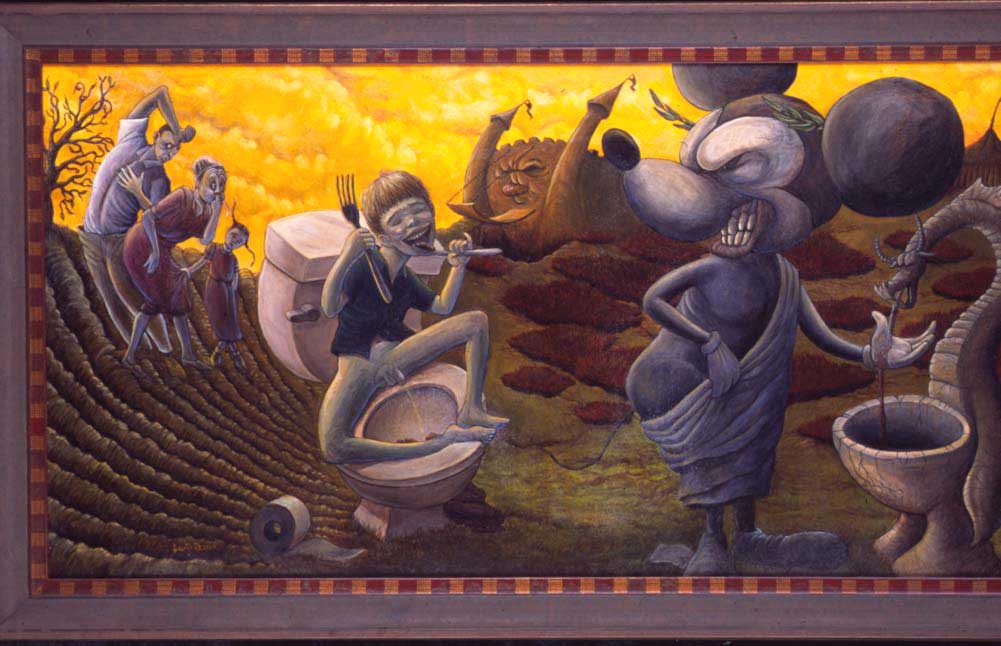
Pop Tart 18x36, 2002, oil on canvas Available for Purchase Andy Warhol noted, "When I got my first television set, I stopped caring so much about having close relationships." Entertainment has become a staple food in the cognitive diet of today's popular culture. This germinates during childhood when work responsibilities and more engaging exploration are often replaced with pacifying amusements. Many adults do not progress beyond this appetite, absorbed as they are in spectator sports, soap operas, video games, and television. Passive, voyeuristic activities have replaced the more compelling leisurely activities of past generations. During rare seasons in my childhood my parents owned a television. I remember faking sickness, thus avoiding Sunday night church service, to watch the "Wide World of Disney". In the painting Mickey Mouse is symbolic of the decoys that distract the boy from God-consciousness. Mickey represents the threat of apathy to a developing spiritual sensitivity. It is an agnosticism spawned by frivolity. To the back left, a Mennonite family stands horrified as the child practices his free will and opts for the "popular-culture-tart" that Mickey excreted. The mouse washes his hands of guilt in a fountain of sacred blood. To the left of the boy is a field requiring real toil and attention. To the right, fake red turf acts as stepping-stones to the fairytale castle. The personified fortress taunts, knowing nothing can compete with his playful diversions. The young boy is vulnerable as he happily eats and adds his own waste to Mickey's toilet. He is feasting on foolishness, as entertainment nourishes his developing worldview. |