|




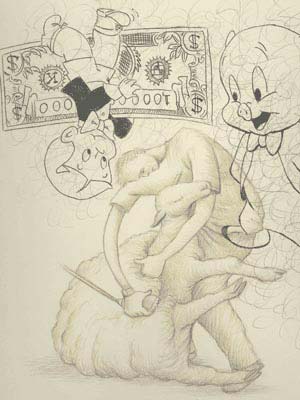
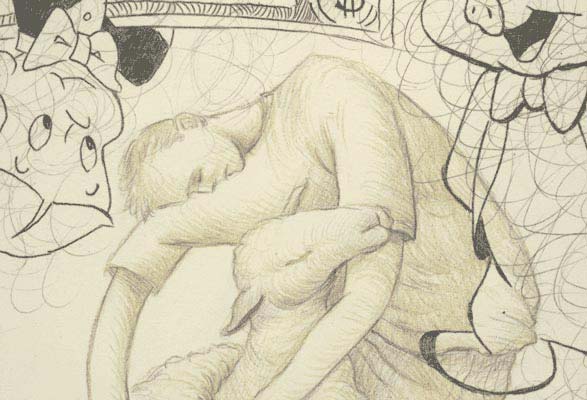
19x15, 2003, prisma bronze & raisen noir, carbon ink.
Available for Purchase
Living on a small East Coast farm, my parents demonstrated industriousness to fiscally stay afloat. Their entrepreneurial spirit modeled how I would later survive as an artist. We boys assisted father on the family farm, in the butchershop, selling vacuum cleaners door to door, and traveling the Peninsula shearing sheep. His peddling resembled my own making of caricatures on carnival circuit. As a child I toiled in the butchershop, wrapping t-bones, sausage, and scrapple, which is a Pennsylvania Dutch meat loaf common in the mid-Atlantic states. It is made from the scraps of the butchered pig: headmeat, skin, heart, liver, tongue, brains, and any other leftover parts. This meat and broth are combined with cornmeal and seasoned with much black pepper. It is shaped into loaves for slicing and frying). Porky Pig has a slight resemblance to the hog illustration used on the shop billboard at the end of the road. The image of a personified hog embodies the tension depicted between Mennonites and pop culture in this studio project. In father's shop, pigs were for scrapple, not for stuttered comical conversation. Work's intrinsic value often overshadowed mere compensation. Its virtue stemmed from the proverb, "Idle hands are the devil's playground." Highly visible "Richie Rich" wealth made one vulnerable to in moral judgments. Work was typically viewed by Mennonites as an individual's natural state.